CONF-APMM 2025

Title:

Quantum Communication and Model Simulation

Date:

August 21st, 2026 (UTC+0)

Organizer:

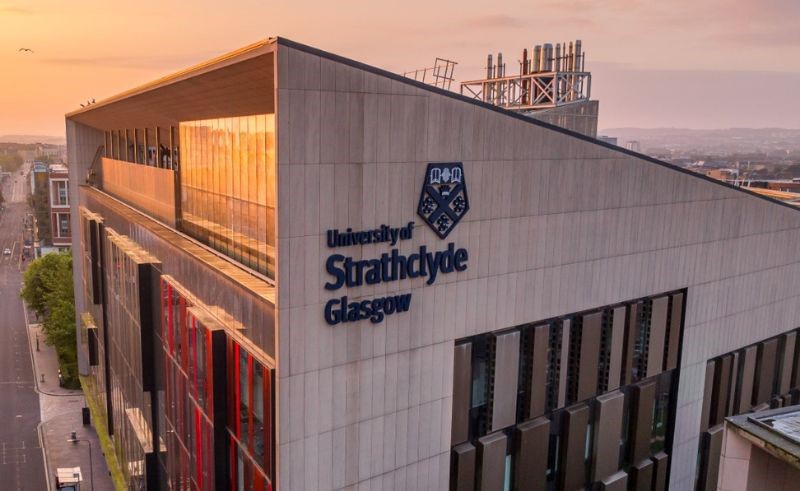
Department of Computer and Information Sciences, University of Strathclyde

Symposium Chair:
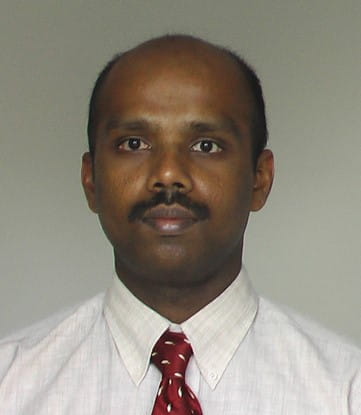
Dr. Anil Fernando

Professor at the Department of Computer and Information Sciences, University of Strathclyde

Personal Bio:

Dr. Anil Fernando received the B.Sc. (Hons.) degree (First Class) in electronics and telecommunication engineering from the University of Moratuwa, Sri Lanka, in 1995, and the M.Sc. in Communications (Distinction) from the Asian Institute of Technology, Bangkok, Thailand in 1997 and Ph.D. in Computer Science (Video Coding and Communications) from the University of Bristol, UK in 2001. He is a professor in Video Coding and Communications at the Department of Computer and Information Sciences, University of Strathclyde, UK. He leads the video coding and communication research team at Strathclyde. He has worked on major national and international multidisciplinary research projects and led most of them. He has published over 480 papers in international journals and conference proceedings and published a book on 3D video broadcasting. He has been working with all major EU broadcasters, BBC, and major European media companies/SMEs in the last decade in providing innovative media technologies for British and EU citizens. His main research interests are in Video coding and Communications, Machine Learning (ML) and Artificial Intelligence (AI), Semantic Communications, Signal Processing, Networking and Communications, Interactive Systems, Resource Optimizations in 6G, Distributed Technologies, Media Broadcasting and Quality of Experience (QoE).

Committee Members

Dr. Udara Jayasinghe, University of Strathclyde, UK, Udara.Jayasinghe@strath.ac.uk
Dr. Prabhath Samarathunga, University of Strathclyde, UK, Prabhath.Samarathunga@strath.ac.uk

Call for Papers

Background:

The rapid growth of high-resolution visual content in modern communication systems has intensified the demand for robust and efficient image transmission under noisy and bandwidth-limited conditions. Although classical techniques such as OFDM and advanced source coding have significantly improved reliability, compressed image data remain highly sensitive to channel impairments, where even small transmission errors can cause severe perceptual degradation. Recent studies have demonstrated that quantum communication can provide enhanced robustness by exploiting quantum superposition and high-dimensional state representations. In particular, frequency-domain quantum processing using the quantum Fourier transform enables orthogonal representations that are inherently resilient to noise, analogous to classical OFDM but operating within the quantum domain. Furthermore, multi-qubit encoding allows multiple bits to be jointly represented in a single quantum state, improving noise tolerance and scalability compared to single-qubit approaches. These developments motivate the exploration of structured quantum transmission frameworks that combine frequency-domain processing and multi-qubit encoding to support high-fidelity image communication.

Goal/Rationale:

Although quantum communication has demonstrated promising theoretical advantages, its While prior work has shown the potential of quantum communication for image transmission, existing systems often rely on either time-domain representations or limited single-qubit encoding, restricting noise resilience and scalability. Separately, quantum OFDM-based approaches demonstrate that frequency-domain quantum processing can significantly improve robustness against fading and interference. However, a unified framework that systematically exploits frequency-domain processing together with scalable multi-qubit encoding for compressed image transmission remains underexplored. The goal of this work is to bridge this gap by developing and evaluating a frequency-domain multi-qubit quantum image transmission framework inspired by quantum OFDM principles. By integrating multi-qubit encoding with quantum Fourier transform–based processing, the proposed system aims to enhance noise robustness while maintaining controlled bandwidth usage and practical system complexity. The framework is designed to operate with standard image codecs such as JPEG and HEIF and is evaluated under realistic quantum noise conditions. Through extensive performance analysis, this study establishes clear design trade-offs between encoding complexity, frequency-domain processing, and reconstructed image quality, providing a principled foundation for scalable quantum image communication systems.

Scope and Information for Participants:

This work focuses on end-to-end quantum image transmission frameworks that leverage frequency-domain processing and multi-qubit encoding to improve robustness under noisy channel conditions. The scope is intentionally limited to quantum–classical hybrid systems, where compressed image bitstreams are mapped to quantum states and processed using quantum Fourier transform–based architectures, including both QFT-based multi-qubit transmission and quantum OFDM-inspired designs. Emphasis is placed on fair bandwidth-constrained comparisons across different qubit sizes, as well as on practical performance metrics relevant to image fidelity, including BER, PSNR, SSIM, and UQI. The study does not aim to replace classical codecs or implement full quantum hardware, but instead provides a system-level and algorithmic evaluation of how frequency-domain quantum processing and high-dimensional encoding jointly improve transmission quality. By unifying insights from quantum OFDM and frequency-domain multi-qubit communication, this work defines a clear experimental and methodological scope for advancing practical, noise-resilient quantum image transmission systems.

Topics:

The main topics of this symposium are listed below.

Quantum Communication

  • Image Communication and Transmission
  • Model Simulation
  • Multi-Qubit Encoding
  • Quantum Computing
  • Quantum Fourier Transforme
  • Quantum Processing

Meanwhile, submissions aligned with the overall conference theme are also welcome.

Theoretical Physics

  • Dynamical Systems
  • Equilibrium Statistical Mechanics
  • General Relativity
  • Integrable Systems
  • Many-body Quantum Systems and Condensed Matter Physics
  • Nonequilibrium Statistical Mechanics
  • Partial Differential Equations
  • Probability and Random Structures
  • Quantum Field Theory
  • Quantum Information
  • Quantum Mechanics and Spectral Theory
  • String Theory and Quantum Gravity

Mathematical Modeling and Simulation

  • Adaptive Control and Non-Linear Control
  • Artificial Intelligence
  • Computational Intelligence
  • Design, Analysis and Applications of Optimisation Algorithms
  • Deterministic, Dynamic, Stochastic, Robust and Combinatorial Optimisation Models
  • High Performance Computing
  • Information Science
  • Intelligent Control, Neuro-control, Fuzzy Control
  • Machine Learning
  • Mathematical Modeling and Simulation
  • Nano- and Bio- Mechanics
  • Optimization Techniques
  • Robotics and Automation
  • Smart Structures and Health Monitoring
  • Soft Computing
  • Structural Optimization
  • Theoretical and Empirical Studies of Computational Methods, Models and Empirical Analysis

Applied Physics

  • Accelerator Physics
  • Accelerator Research and Development
  • Acoustics, Noise and Vibration
  • Applications of Particle Trapping
  • Biophysics, Medical Physics
  • Detectors and Data Handling
  • Engineering Physics
  • Instrumentation and Control Components
  • Magnetic Devices and Materials
  • Materials Physics
  • Mechanics, Rheology and Tribology
  • Nano and Metamaterials
  • Neuromorphic Computing
  • Nuclear Physics
  • Quantum Chromodynamics and Quantum Computers
  • Spin Dynamics
  • Statistical Mechanics
  • Stealth Technology
  • Storage Ring Physics
  • Systems and Automation Thermodynamics

Mathematics and Applied Mathematics

  • Algebra and Its Application
  • Applied Partial Differential Equations
  • Bayesian Inference
  • Control Theory
  • Discrete Applied Mathematics
  • Fluid Dynamics
  • Fuzzy Mathematics and Its Applications
  • Geometry
  • Image Processing
  • Integral Equations
  • Nonlinear Problems in Mechanics
  • Numerical Analysis
  • Optimization and Operational Research
  • Planning and Scheduling
  • Probability Theory
  • Regression Analysis Estimation Theory
  • Sampling Theory
  • Statistics
  • Stochastic Processes

Submission:

Prospective authors are kindly invited to submit full papers that include title, abstract, introduction, tables, figures, conclusion and references. It is unnecessary to submit an abstract in advance. Please submit your papers in English.

Each paper should be no less than 4 pages. One regular registration can cover a paper of 6 pages, and additional pages will be charged. Please format your paper well according to the conference template before submission. Paper Template Download

Please prepare your paper in both .doc/.docx and .pdf format and submit your full paper by email with both formats attached directly to sympo_glasgow@confapmm.org

Important Dates:

Process Date & Time
Submission Deadline August 14, 2026
Symposium Date August 21, 2026
Notification of Acceptance 7-20 workdays

Publication:

Accepted papers of the symposium will be published in Theoretical and Natural Science (TNS) (Print ISSN 2753-8818), and will be submitted to Conference Proceedings Citation Index (CPCI), Crossref, CNKI, Portico, Engineering Village (Inspec), Google Scholar, and other databases for indexing. The situation may be affected by factors among databases like processing time, workflow, policy, etc.

Publication info

Title: Theoretical and Natural Science (TNS)
Press: EWA Publishing, United Kingdom
ISSN: 2753-8818, 2753-8826 (electronic)

This symposium is organized by CONF-APMM 2026 and it will independently proceed the submission and publication process.

* The papers will be exported to production and publication on a regular basis. Early-registered papers are expected to be published online earlier.

Ways to Participate

Venue:

Room LT310, Livingston Tower, Department of Computer and Information Sciences, University of Strathclyde, Glasgow, UK

Attend in Person:

If you want to attend the workshop on-site, please email sympo_glasgow@confapmm.org. The symposium seats are limited. Both contributors and non-contributors who wish to participate in the symposium in person need to apply to the symposium organizers.

VISA:

Welcome to GOV.UK

In order to ensure the information is correct and up to date, there may be changes which we are not aware of. And different countries have different rules for the visa application. It is always a good idea to check the latest regulations in your country. This page just gives some general information of the visa application.

UK Visa Information

What you need to do

  • Check if what you plan to do in the UK is allowed as a Standard Visitor.
  • Check you meet the eligibility requirements.
  • Check if you need to apply for a visa to visit the UK.
  • Apply for a Standard Visitor visa online - if you need one.

Check you meet the eligibility requirements

You must have a passport or travel document to enter the UK. It should be valid for the whole of your stay.

You must be able to show that:

  • You'll leave the UK at the end of your visit.
  • You're able to support yourself and your dependants during your trip (or have funding from someone else to support you).
  • You're able to pay for your return or onward journey (or have funding from someone else to pay for the journey).
  • You'll not live in the UK for extended periods through frequent or successive visits, or make the UK your main home.

Check if you need a visa to visit the UK

Depending on your nationality, you'll either:

  • Have to apply for a Standard Visitor visa before you travel to the UK.
  • Be able to visit the UK for up to 6 months without needing a visa.

If you do not need a visa, you must still meet the Standard Visitor eligibility requirements to visit the UK. You may be asked questions at the UK border about your eligibility and the activities you plan to do.